
Boron Doped Diamond Modified Electrode for Antibiotic Detection
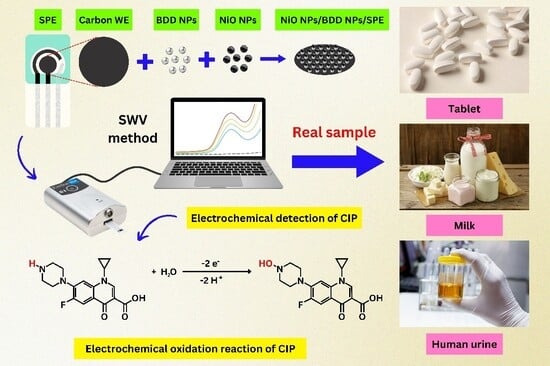
The widespread use of antibiotics in healthcare and agriculture has led to their persistent presence in environmental systems and food chains, accelerating antimicrobial resistance (AMR) and posing serious risks to public health. Our lab focuses on developing highly sensitive and selective electrochemical sensing platforms to enable rapid, on-site detection of antibiotic residues at trace levels.
We leverage boron-doped diamond (BDD) electrodes combined with advanced nanomaterials such as MXene, metal nanoparticles, and graphene-based composites to enhance electron transfer kinetics and improve analytical performance. Our approach emphasizes real-world applicability, including detection in complex matrices such as milk, water, and biological samples. Through this work, we aim to bridge the gap between laboratory-scale sensing technologies and deployable monitoring systems for food safety and environmental protection.
our works in this project can be listed as:
- Electrochemical Sensor of Ciprofloxacin on Screen-Printed Electrode Modified with Boron-Doped Diamond Nanoparticles and Nickel Oxide Nanoparticles
Biosensors
DOI: https://doi.org/10.3390/bios16030148 - Enhancement of Levofloxacin Electrochemical Sensor Sensitivity on Nanosized Boron-Doped Diamond-Based Screen-Printed Electrode
IEEE Sensors Letters
DOI: 10.1109/LSENS.2025.3608171 - Sensitive Electrochemical Sensor of Levofloxacin Using Boron-Doped Diamond Electrode Modified with Ti₃C₂Tₓ (MXene)
Journal of Food and Drug Analysis
DOI: https://doi.org/10.38212/2224-6614.3517 - Electrochemical Detection of Ciprofloxacin Antibiotic on Gold Nanoparticles-Modified Boron-Doped Diamond (AuNPs-BDD) Electrode
AIP Conference Proceedings
DOI: https://doi.org/10.1063/5.0193659 - Fabrication and Characterization of rGO-SnO₂ Nanocomposite for Electrochemical Sensor of Ciprofloxacin
Sensors International
DOI: https://doi.org/10.1016/j.sintl.2023.100276 - Electrochemical Detection of Ciprofloxacin Using Cu–Ag Core–Shell Nanoparticles Modified Screen-Printed Electrode
IEEE International Conference on Sensors and Nanotechnology (SENNANO)
DOI: https://doi.org/10.1109/SENNANO57767.2023.10352516 - Study of Levofloxacin Electrochemical Detection on Nickel Electrode
Proceedings of the International Conference on Advanced Technology and Multidiscipline (ICATAM)
DOI: https://doi.org/10.1063/5.0119160 - Development of Ofloxacin Electrochemical Sensor in Milk Sample Using Boron-Doped Diamond Electrode Decorated by Zinc Nanoparticles
Analytical & Bioanalytical Electrochemistry
DOI: 10.22034/abec.2023.704567 - Electrochemical Sensor of Levofloxacin on Boron-Doped Diamond Electrode Decorated by Nickel Nanoparticles
Indonesian Journal of Chemistry
DOI: https://doi.org/10.22146/ijc.73515 - The Dependence of Boron Concentration in Diamond Electrode for Ciprofloxacin Electrochemical Sensor Application
Indonesian Journal of Chemistry
DOI: https://doi.org/10.22146/ijc.82135
Food Contamination Sensors
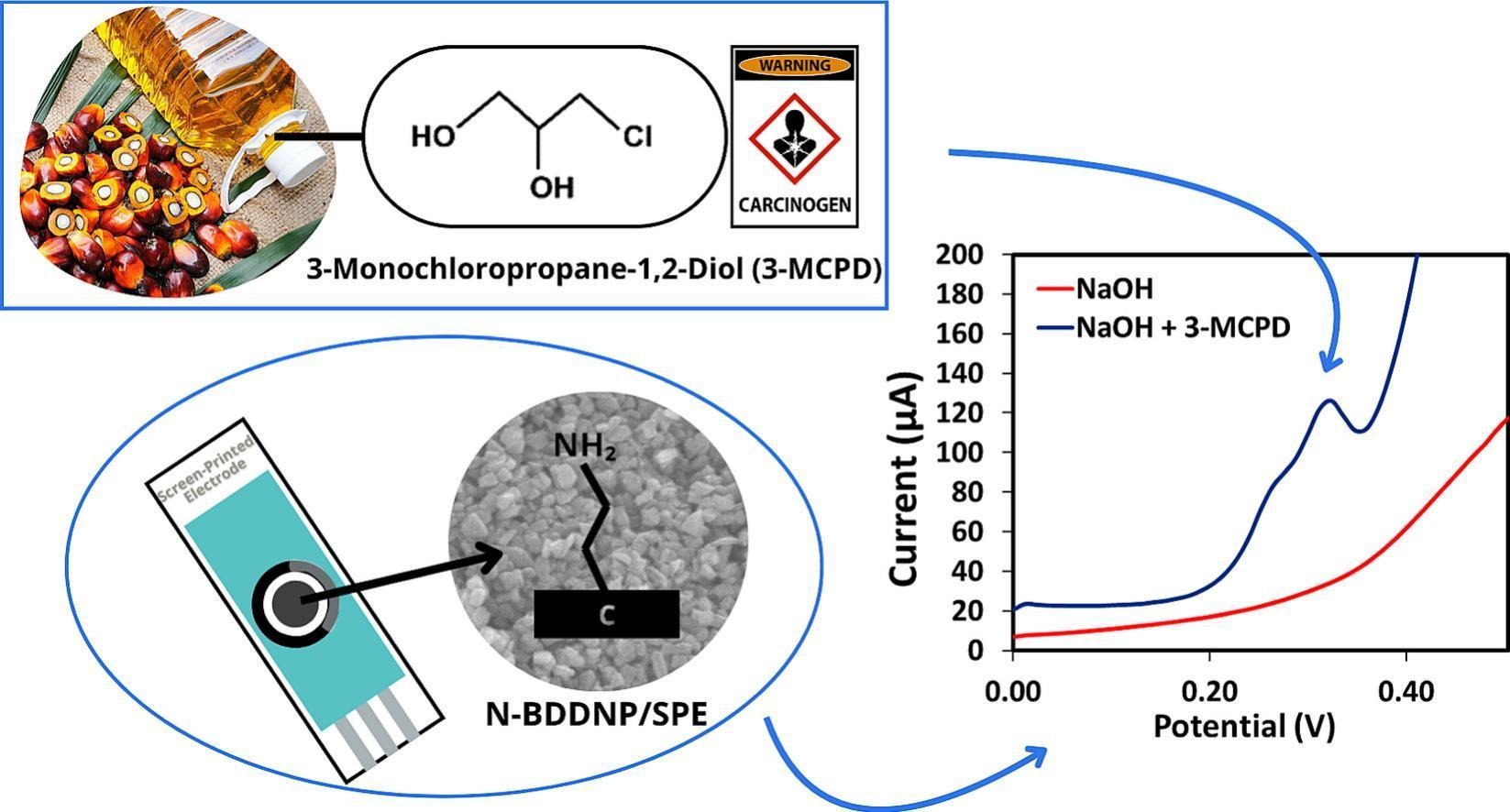
Ensuring food safety requires reliable detection of trace-level contaminants that may arise during processing, packaging, or environmental exposure. Our lab develops electrochemical sensing technologies tailored for the detection of hazardous compounds in food systems, including processing-induced toxins, artificial additives, and pesticide residues.
We integrate functional nanomaterials to achieve high selectivity and sensitivity toward food contaminants such as 3-MCPD, aspartame, and heavy metals. By combining material engineering with electroanalytical techniques, we aim to create rapid, cost-effective, and portable sensing platforms that support regulatory compliance and protect consumer health. Our work also emphasizes green chemistry approaches and scalable fabrication methods to ensure sustainability and practical deployment.
Our works in this project can be listed:
- Novel Study of 3-Monochloropropane-1,2-diol Detection on Amine-Terminated Boron-Doped Diamond Nanoparticles
Microchemical Journal
DOI: https://doi.org/10.1016/j.microc.2025.114520 - Electrochemical Detection of Aspartame on Glassy Carbon Electrode
AIP Conference Proceedings
DOI: https://doi.org/10.1063/5.0193660 - Electrochemical Detection of Antimony in Bottled Water Using Bi₂MoO₆/Graphene Oxide-Modified Screen-Printed Electrode (Bi₂MoO₆/GO-SPCE)
International Journal of Electrochemical Science
DOI: https://doi.org/10.1016/j.ijoes.2025.101018
Boron Doped Diamond Modified Electrode for Heavy Metal & Environmental Monitoring
Heavy metal contamination remains a critical global challenge, particularly in water systems and consumer products such as cosmetics. Exposure to toxic metals such as lead, mercury, and antimony can lead to severe health issues, including neurological disorders and organ damage. Our lab develops electrochemical sensing platforms to enable rapid and sensitive detection of these contaminants in environmental and real-world samples.
By utilizing BDD electrodes and functional nanomaterials, we achieve high selectivity and low detection limits even in complex matrices. Our research aims to support environmental monitoring, regulatory enforcement, and public health protection by providing reliable and accessible detection technologies.
Our works in this project can be listed:
- Diamond modified electrode for heavy metals detection in cosmetic matrices (Upcoming)
- Sensitive and Selective Antimony Detection Using Boron-Doped Diamond Nanoparticles
Sensors & Materials
DOI: https://doi.org/10.18494/SAM4599 - Influence of NaBH₄ on the Sensitivity of As³⁺ and As⁵⁺ Detection Using Gold-Modified Boron-Doped Diamond (Au-BDD) Electrodes
Environmental and Materials
DOI: https://doi.org/10.61511/eam.v2i1.2024.804
Boron Doped Diamond Modified Electrode for CO₂ Reduction
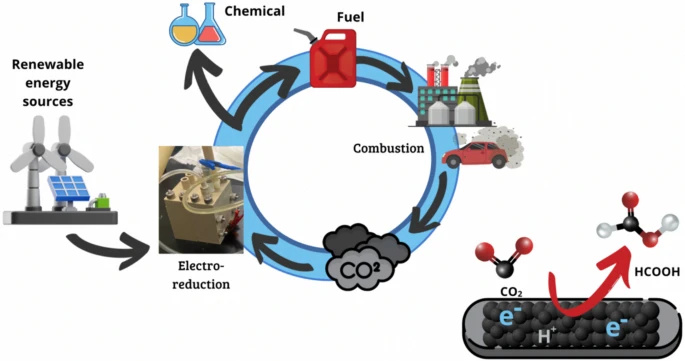
Addressing climate change requires transformative approaches to carbon management. Our lab explores electrochemical carbon dioxide (CO₂) reduction as a sustainable pathway to convert greenhouse gases into valuable chemicals and fuels.
We focus on the design of advanced electrocatalysts based on boron-doped diamond electrodes combined with nanostructures such as MXene, metal nanoparticles, and hybrid nanostructures to enhance catalytic efficiency and product selectivity. While this research direction is still evolving, it represents a strategic expansion of our expertise in electrochemistry toward energy and sustainability applications. Our long-term vision is to contribute to scalable carbon conversion technologies that support a circular carbon economy.
Our works in this project can be listed:
- Effect of SnO–SnO₂ Nanoparticles on CO₂ Electrochemical Reduction Activity
Journal of Solid State Electrochemistry
DOI: https://doi.org/10.1007/s10008-024-05983-7 - Electrochemical Study of CO₂ Reduction on Ti₃C₂Tₓ-Modified Boron-Doped Diamond (BDD) Electrode
Inorganic Chemistry Communications
DOI: https://doi.org/10.1016/j.inoche.2022.109228 - Enhancement of the Catalytic Effect on the Electrochemical Conversion of CO₂ to Formic Acid Using MXene (Ti₃C₂Tₓ)-Modified Boron-Doped Diamond Electrode
Energies
DOI: https://doi.org/10.3390/en16124537 - Metal-Modified Carbon-Based Electrodes for CO₂ Electrochemical Reduction: A Review
Journal of Electroanalytical Chemistry
DOI: https://doi.org/10.1016/j.jelechem.2021.115634
Nanostructure Modified Electrocatalytic Degradation & Environmental Remediation
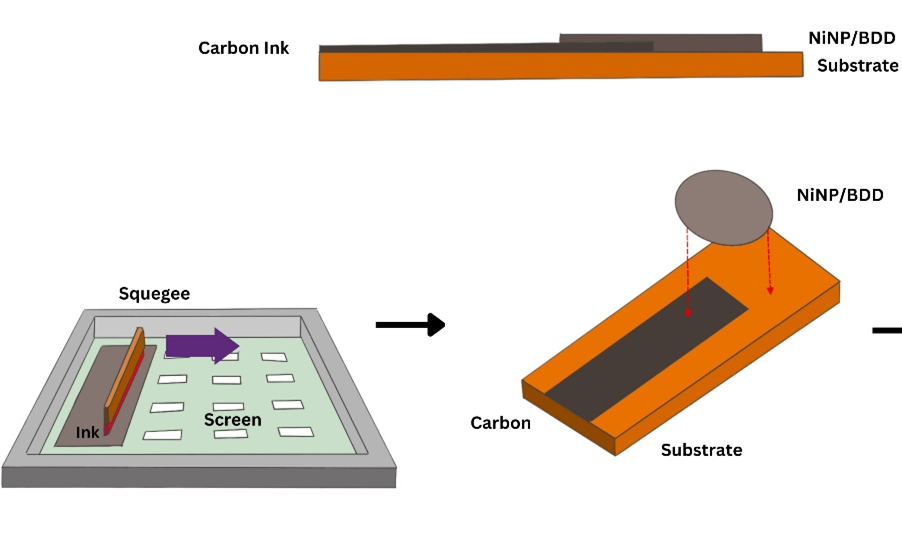
In addition to sensing technologies, our lab investigates electrocatalytic and photocatalytic systems for the degradation of environmental pollutants. This includes the breakdown of organic dyes, volatile organic compounds, and other hazardous substances in water and air.
We design nanostructured catalysts that enhance reaction efficiency under electrochemical or light-driven conditions, enabling sustainable and energy-efficient remediation processes. By integrating material innovation with environmental applications, our research contributes to cleaner ecosystems and supports the development of green technologies for pollution control.
Our works in this project can be listed:
- Fabrication of homemade Screen-Printed Nickel Nanoparticles/Boron-Doped Diamond Electrode for Electrochemical Degradation of Methyl Orange
Materials Chemistry and Physics
DOI: https://doi.org/10.1016/j.matchemphys.2026.132145 - Enhancement of visible light organic dyes photodegradation using TiO₂ (001)/Graphene oxide nanocomposite
Inorganic Chemistry Communications
DOI: https://doi.org/10.1016/j.inoche.2023.111379 - Unique TiO₂-enveloped Ti₃C₂ composites for efficient visible light-assisted photoreduction of bicarbonate
Chemical Physics Letters
DOI: https://doi.org/10.1016/j.cplett.2023.140541